Monday, 8 November 2021

PASSING ON TO OTHERS

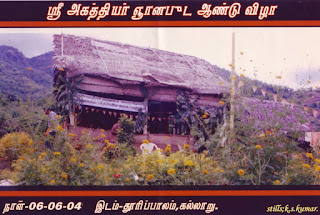
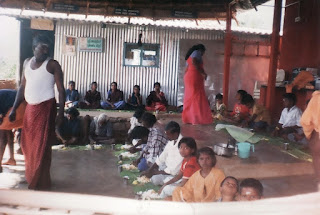
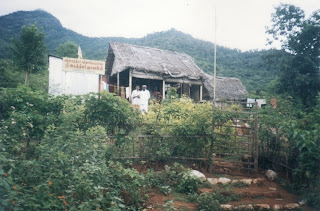
Watching the movie "Jai Bhim" that spoke out for the tribal natives brought me back in time to the few days I spent at Kallar ashram in 2005. That was my first visit to Tavayogi's ashram. I was there taking up a call from him to visit his ashram. When I met him a month earlier in Malaysia he ran through the activities he conducted at his old ashram and showed me photos of it. It included feeding. When I arrived at Kallar Tavayogi invited me on his regular morning walk the next day. As we came down the ashram perched on a hillock and crossed the Methupalaiyam to Ooty railway line and walked through the small hamlet many people were already going by their daily chores. Among them were the tribal natives who stood out. They had stacks of wood on their head. Their children followed behind them. All were barefoot. Tavayogi explained to me that these people lived in makeshift huts and their only source of income was cutting wood from the nearby forest and selling it in town. They lived with and near nature. I was told the government was in the process to build them proper homes on an adjacent plot of land. When I asked if we could do a feeding, Tavayogi was overjoyed and immediately we left for the market in Methupalaiyam. He called for Mrs. Sarojini (Mataji Sarojini Ammaiyar) to come by to the ashram. He called and informed the tribal folks to come by and help in preparing the food too. There was a hustle and bustle suddenly on the grounds of an otherwise quiet ashram. Crowding around him they passionately hugged and held on to Tavayogi, calling out "Tata!" My heart melted when I saw the bliss in these children's eyes and a smile on their faces in getting a simple decent meal that day.


Later as I saw some make their way to school minus the shoes I asked if we should buy them shoes. But I was told that their nature is that they are not used to wearing shoes. So we decided to buy them dresses instead. As Tavayogi, Mataji, my brother who joined us and I went from shop to shop to make our purchases, one shop owner who knew that it was for an ashram dumped old faded and dusty clothes before us telling us it was going cheap. Tavayogi's anger spiked and he gave him a good scolding. We walked out of the shop. We bought the new clothes we wanted from other shops and made our way back to the ashram. In our absence, word had got around that Tavayogi was buying them Deepavali clothing. The children had all gathered at his ashram. The whole ashram came alive with these children's laughter. We had brought the joy of Deepavali into their lives much earlier than the actual day. I learned to do charity and bring joy and laughter to other's life that day. This was my first lesson in coming to the path of the Siddhas.


As I sat at breakfast this morning and watched my grandchildren fight over food and simple things like tissue, I realize the "I" was growing in them. They have come to know about one component of life now that of having possession of or possession over a thing. We had to counter-propose and inculcate the habit of giving and sharing with others. Just as how Tavayogi used to inculcate small virtues and habits in us, I am attempting to do that with my grandchildren.

I caught the flu on Friday. It has been 6 years now since I caught one. It has come to remind me how miserable the flu can make you. I used to catch it very often from work back then. Soon I found out from my architect colleague that the building we worked in was defined in architectural terms as "a sick building". Sure enough, after I retired I never caught the flu until this time. Wanting to address the discomfort I had my wife prepare some kitchen spices and drank them. I took over-the-counter medicine too as since my son-in-law and grandchildren caught it too, he made some purchases. But knowing that these drugs would only relieve the pain and discomfort and bring an abrupt halt to the flu, not entirely ridding it when Mahin in a timely manner messaged me that he was going over to meet Siddha physician Ariva Aiya today, I asked for something that would thoroughly clean the house, flush it clean and bring my body back to its normal state. Mahin delivered it to me. 

I remember when I spoke about having the flu frequently, in the past to Tavayogi, he told me that's all right for it comes with the seasonal change. "Make sure that the ailment is not due to your past karma," he said. He was giving us a gentle reminder to only do good then. I understand now that there are some illnesses, diseases, ailments that are karma-based where there is no cure or relief and one has to live with it. Mahin and I had discussed this matter over the phone a couple of days ago. We hope that Agathiyar would clarify our doubts. 

How did I catch the flu then? I and my grandchildren played in the rain. Why did we play in the rain? To get connected with nature. Agathiyar had asked a reputed Nadi reader who went running looking for a shade the moment it began to rain, "How are you going to become a Siddha if you fear the rain?" I guess just as we passed on the good virtues we passed the flu on to each other too.

Friday, 5 November 2021

BREAKING THE "I"

Traveling the path of the Siddhas, we have come to understand that surrender and dropping the "I" or Ego is a must to progress further. Either can take place first, followed by the other. When man is trashed and trembled and has no place to seek asylum, he looks towards the skies. When he is pushed to the corner he cries out to the divine. When unable to endure extreme pain he calls out to God. In the face of danger, he prays to God. He surrenders in these moments to a bigger power. 

Others who are drawn to seek answers arrive at the door of a Guru. A seeker turned a faithful disciple shall experience God in the presence of such mighty Gurus. He surrenders to the Guru willingly seeing a savior in him. The true Guru breaks his last remaining Ego bringing him to lose his "I". He then instructs the disciple on the path to freedom and frees him from enslavement to all things acquired by the "I" by making him drop each of his attachments. Now freed of his attachments, the disciple begins to see himself as a spark of the bigger Atma. The Jeevatma that was a spark of the Paramatma returns to its core with the grace of the Guru and Divine. That is the role of the Guru who has himself transformed into the nature of God. Only those who are ready to have their ego shattered make it to the Guru and hang around long enough to have him chisel and mold them not into his shape or identity, but to become God in essence. Man becomes divine and pure. He becomes a vessel of love, kindness, and compassion taking on the nature of God.

We read Yogi Ramsuratkumar tell us how his master in an alarming and cruel way broke his ego in the previous post. Olga Ammann, in "Yogi Ramsuratkumar - The Mystery of Becoming God" published by Yogi Ramsuratkumar Bhavan Mauritius, 2008 in writing on the Yogi speaks of the Guru and the experiences that he gives us, says,
Bhagavan gives whatever is required when we require it. The Guru does nothing for himself, everything is for us. The desperation we experience, the resentment we feel towards him, and the estrangement we ourselves bring about, all these emotions are natural and necessary stages in the progression towards faith, and are guided by his concern for our growth. In those days and nights, our Yogi, like anyone who walks along the path towards Realization, must have had a number of experiences that are unimaginable for us. These experiences, as he himself affirmed, canceled his identity to the last crumb. They left him totally empty. That is to say, before meeting God, it is necessary that man be shaken by something like a cataclysm, he must be crushed.
Trampled and crushed one then surrenders.
“This beggar doesn’t ask Father why. This beggar simply obeys. Father knows. He runs the whole universe” 
The most unexpected episode of how a Guru breaks the ego of another is told by Swami Vishnudevananda. He writes on his first encounter with his master Swami Sivananda, in "My Years with the Master" at http://www.sivanandaonline.org.
"As if by chance, I had found a piece of paper that intrigued me. One night when I was working late and was searching for a misplaced paper, I found a small pamphlet in the trash basket. It was called "Sadhana Tattva" and was by Swami Sivananda of Rishikesh. As soon as I read it, my body began to shake. It began with ‘An ounce of practice is worth tons of theory.’ Here was a teacher who was down-to-earth and practical. There was nothing mysterious about his teachings; I felt that I had to meet him for myself. I got a few days leave from the army. 

I was an arrogant boy on leave from the army. It meant that I had to travel a day and a night from my army base in Jullunder. I would have only a few hours at the Ashram - just to see the Master and then go right back. 

The first time I saw Swami Sivananda he was sitting with about 30 or 40 people around him. He looked like an ordinary man among them. The look on his face and manner of speech were simple and straightforward. Each word came from his heart. There was no kind of religious hypocrisy, no sitting on a tiger skin with ashes smeared all over his body. He had an extraordinary spiritual glow. 

The second time, I saw him Swami Sivananda was coming up the stairs in my direction. I didn't want to bow my head to him. I was young and arrogant and never wanted to bow my head to anybody-Swami, God-realised soul or whoever, I didn't care. But it is the tradition in India that you should bow your head to a holy man. To avoid the situation I just moved out of his path. 

The Master saw me and headed in my direction. He asked me who I was and where I was coming from. Then he bowed down and touched my feet!! 

My whole body began to shake violently. With all my heart, with all my life and love, I learned to bow without any type of reservation. He touched my heart not with miracles or shows of holiness, but with his perfect egoless nature. 

He didn't consider that I was just a stupid boy standing there, though I was just that. He touched my heart and broke the ego. That was my first lesson, and if I could attain one millionth of the state of egolessness of the Master, it is His Grace. 

Before leaving, I went down the Ganga where it was the custom of the Ashram to do Aarati (waving of lights) every evening. All the devotees and inmates of the Ashram assembled by the banks of the Ganga to watch Master perform this evening worship. I was sceptical. I was of a scientific temperament and knew that a river is only water, H2O-imagine worshipping H20!! 

But as I stood there and watched Master waving the lights, I saw the river become a mass of flowing lights. At that instant the river assumed a divine flow, a manifestation of the Grace of the Lord. Master turned and looked at me and in my mind I heard his message, “God pervades everything; this too is His Special Form.” This entirely changed my outlook on life.
Ram Dass describes his very first meeting with an Indian saint, who was to become his Guru later, and how the saint broke his ego.
"The night before I met Maharaji, I went outside to go to the bathroom. Under the star-filled Indian skies, I thought about my mother who died the previous year of cancer of the spleen. As I was thinking about her, I experienced the powerful feeling of her presence. Telling no one, I kept this meaningful experience to myself. The next day, I met Neem Karoli Baba – that experience changed my life forever…."
Follow the rest of his story at http://www.ramdass.org/meeting-maharaji/ and at http://www.youtube.com/watch?v=FkmOdbJnMGw

My ego was broken and shattered the very day I invited Tavayogi over to my house in 2005. He severed my attachment to him even before it could sprout. Instead, he passed my hand to Agathiyar directly as the father would place the hand of the bride into the palms of the groom asking to take care of his daughter. Then he began to work on me meticulously making me drop all that I held dear and close and cherished, like the Navaratna studded ring on my finger and the Rasamani bead I adorned. During my audience with Thavathiru Rengaraja Desigar in 2003, three years prior to meeting Tavayogi, he chose to ignore me and continued to speak to my driver. Finally interrupting them several times asking to be blessed he told me my coming there itself was a blessing. I was devastated and returned disturbed. I did not understand what he meant. I only came to understand many years later as I matured, the subtle teaching. I believe through foresight he knew I was destined to meet Supramania Swami in a few days. Hence he did not lay his hand on me. Even before Supramania Swami and Tavayogi were shown to me through the Nadi reading in 2002, the young Sivabalan who brought in these Nadi readers had dashed my ego that "I" was the chosen one to build Agathiyar's temple. In 2019, Agathiyar made it known that we can be disposed of at any time. Before the many laurels of fame and pride weighed down on me, and could get into my head he had me dissolve the AVM team on Whatsapp. Before the notion that "I" did charity could sink into us, he dissolved the group Amudha Surabhi. Before we could become addicted to the rituals and got hooked on to doing charity and stagnate, losing sight of the goal that he had in store for us, he brought the entire commune down and had us move out to another terrain, another pasture, another adventure and a journey of going within. He had us forcibly locked up in our homes with the advent of the pandemic. He had us practice Yoga and inquire into the Tattvas, the Breath, the Atma, and the Prapanjam. I was disappointed that some devotees did not or refuse to understand the subtle message that came across to us. There are devotees asking when I am going to call for a Puja, gathering, or Satsangam at Agathiyar Vanam Malaysia (AVM). My wish was to see every home become AVM. I would have rejoiced if they had extended an invitation to me and others to join them and their families at puja in their home. I would have rejoiced if they had taken up doing charity with their family. Much as I tried I have failed in trying to break the hold and dependency in gathering at centers.

Surprisingly after two years, Agathiyar extended an invitation to all that he wanted to see them at AVM again now. Maybe he read their thoughts. But only a handful turned up. I was surprised by the poor show in attendance. Maybe the pandemic and fear of contracting the virus have kept them away. We shall give them the benefit of doubt. I believe he has shown me those whom he wants to be part of his annual celebration that he has asked to hold in January. 

Having taken numerous births to finally make it as a human and having taken further births to finally discover the Siddha path, many who had finally made it to the door, choose to wait a while outside, preferring to while their time, in further talk and investigation, not wanting to step in as yet. The lure of the material world is so strong that they find it difficult to shake it off. Though they claim that they are on the path of the Siddhas, their faith was distracted by the numerous other paths, gurus, and their teachings. Although they proclaim they have faith in the Siddhas, they do not place trust and confidence in them. Their faith is akin to wanting sureties or guarantees. They wait to see someone come along and take the leap before feeling safe to do so too; or as David Miller says they might insist on checking the ropes and bindings, maybe even consult an engineer, and then watch an elephant cross the rope bridge across the ravine before deciding to do so. Besides the many who kept away the many whom Agathiyar sent over were jewels in the crown. But attracted by the lure of Maya that throws before them the pleasantries and as they are still bound by their duties and responsibilities, the divine and the Siddhas came numerous times to remind them of the pull of Maya. Agathiyar did not wish to throw the harness around them to restrain them anymore nor rope them in forcefully but instead, let them go their way. While some seemed to be lost for direction after the dissolution of the group other picked up the cue and stepped into doing yoga in the confines of their homes besides carrying on their home puja.

When we are so close to arriving at our destiny some give up or give in to doubts and confusion. They question. They hold back. Fatigued and tired out they lose patience. They forget that this might be the last obstacle to cross in the obstacle race or the last remedy to carry out in the series of many long lists given each time they come to Agathiyar. We might be at the threshold of the inner sanctum. What needs to be done is to wait for the veil to be drawn aside. Just as the priest draws the veil aside at the temple and we catch a glimpse or darshan of our favorite deity, the Atma is just behind the veil waiting to redeem us and lead us to the Paramatma that shines with effulgence. Taking a final step would bring the effulgence within and set our Atma ablaze. Just as the fire burns down the home, our physical body or Udal returns to its elements. The Uyir or breath fuels the burning Atma hastening the merger in the Param. It is all a matter of time. We were truly blessed to have a Guru show the path and then step aside. The journey then is ours to pursue. The Guru moves back into his sanctuary satisfied that he has taught another the teachings, or shown another the path and has saved yet another Atma from the clutches of ignorance.

Thursday, 4 November 2021

TIMING IS ESSENTIAL

S. Parthasarathy in giving an account of Yogi Ramsuratkumar's life in his book, "Biography of Yogi Ramsuratkumar - The Godchild of Tiruvannamalai (Amarakaviyam), wrote, that when the Yogi accepted and surrendered to Swami Ramdas, Ramdas did not receive him well.
The Yogi has this to say about his guru, "Papa (Ramdas) did not allow this beggar to understand Him. The time was not ripe. This beggar had to wait till Papa Himself revealed His Divinity to this beggar, to make this beggar understand that Papa was his Father."

Systematically Swami Ramdas and Mataji Krishnabai made Ram Surat Kunwar behave like a mad man and made the world believe that he had become mad. They drove him out of the ashram forcibly so that he would remember them constantly. They used harsh language whenever he was before them among the crowd of the devotees. By doing so Swami Ramdas and Mataji Krishnabai removed his ego totally. But it took a very long time. In the process, the pain, the sufferings he experienced were acute. Ram Surat Kunwar again asked Swami Ramdas to allow him and his family to live in the ashram. 

He said, “Papa, I have come here with the great faith that you would allow me with my family to live here. I am not able to work anywhere since the initiation. If you drive me away, where shall I go and how can I live?” 

Papa vehemently answered, “Go and beg. You cannot live in the ashram. There are enough people in the ashram to work. Remember, under a big tree, another big tree cannot grow. Only thorny bushes and grass alone will grow.” 

Ram Surat Kunwar shocked on listening to the words of his Master exclaimed, “Papa, should I beg for my food? Am I a beggar, Papa?” 

Papa, without answering, went inside. From that day Ram Surat Kunwar called himself a beggar. His Guru, His Master, His God asked him to beg and so he became a “beggar”.

In later years Yogi Ramsuratkumar said “Nobody can love this beggar like my Father Swami Ramdas and nobody can torture this beggar like my Father Swami Ramdas. My Father killed this beggar because He loved this beggar. This beggar died at the holy lotus feet of my father Swami Ramdas in the year 1952. After that my Father alone exists and not this beggar. This name Yogi Ramsuratkumar is not this beggar’s name; it is the name of my Father. Father would always shower his grace on the people who remember this name."

In "Waves of Love", published by Yogi Ramsuratkumar Bhavan Mauritius, we read that,

It was the third chance to visit Ramdas. The two great Masters (Bhagavan Raman Maharishi and Sri Aurobindo) had passed away. This beggar thought to himself, “'Let me try again to visit Ramdas, for he is recognized as a great sage. So in 1952 this beggar did not go to Tiruvannamalai, nor did he go to Pondicherry, for the Masters were not there. But this time Swami Ramdas turned out to be an extremely different person. At the very first sight, Ramdas could tell a number of intimate things about the life and mission of this beggar which nobody but this beggar knew. It was then that this beggar first understood that the great master Ramdas was this beggar's Father. Swami has killed this beggar, but life has come. Millions and millions of salutations at the lotus feet of my Master, Swami Ramdas! He has initiated this beggar in Ram nam and has asked to chant it all the twenty four hours. This beggar began to do it and in the space of a week, this beggar has got this madness. The same madness still continues.” 
When writer the late Balakumaran out of pity hurried Yogi Ramsuratkumar to see a couple standing in a queue first as they held a newborn baby in the midday sun, the Yogi like Thavathiru Rengaraja Desigar did not respond. Finally, after several attempts at getting the Yogi's attention, the Yogi asked him if he was perturbed by the situation. When Balakumaran replied that he was indeed disturbed, the Yogi asked him to invite them in. But that meeting did not go well and turned sour. Finally, the Yogi tells him that it was his place and space and he knew whom to see or allow and when to see them.

Similarly when I went over to Ongkarakudil eager to meet Thavathiru Rengaraja Desigar after his followers at his affiliate of the Agathiyar Sanmarga Sangam in Dengkil spoke highly about their guru, I was dumbfounded when Swami remained silent as I asked that he bless me. After several attempts at asking him finally, he told me coming to Ongakarakudil itself was a blessing. I went back disappointed not able to comprehend his words. Was I outlawed there? Did I stray by mistake into their premises? Was I not fit enough? These questions riddled me. Finally, Agathiyar came in the Nadi a couple of years later telling me that I did not have the green light from the Siddhas to go over there then. He added, "Now you can go. You shall get his blessings." I guess there is a specific time to meet such Mahans and that we cannot simply intrude into their space. Later I read Ramadevar Siddhar had laid down some strict rules before anyone could see Thavathiru Rengaraja Desigar.

Indeed. The time was not ripe. I too had to wait till Agathiyar himself revealed Thavathiru Rengaraja Desigar's state of divinity to me in subsequent Nadi readings. I guess Agathiyar preferred that I hear it from him rather than his followers. But I never went back as I had held on to Supramania Swami. Tavayogi and Agathiyar.

It took me years later to realize that Thavathiru Rengaraja Desigar was indeed humble and only expressed the power of the Siddhas in bestowing their grace to those who step into their abodes and places of worship. I figured that he was telling me "Who am I to bless you when the Siddhas are present there." He too was pointing me to the Siddhas rather than take on the responsibility that comes with the showering of blessings.

In reading about the Yogi's mission I guess I can see a relationship here that Agathiyar mentioned. Parthasarathy quotes the Yogi on his mission, 
"My Father has sent this beggar for a specific work. This beggar needs a few people to do his Father’s work. This beggar is doing that work. See the door. The door is always closed. This beggar would see only those people whom my Father sends. This beggar is not meant for the masses. Let the people go to others. This beggar does not need a crowd. This beggar needs only a few people who can do my Father’s work. All other saints have done great works but this beggar did not do anything. Some saints built temples and ashrams, some others did great works and gave philosophies, some others preached the way to Father and the way of life, but this beggar leaves behind him only his Name.
The Masters have their own way of doing the Father’s work. The real work is, uniting, merging the chosen beings with my Father. That’s all. We were together, we are together and we will be together. We cannot exist without each other. When Lord Siva comes, He comes along with His Ganas. When a Guru comes, he comes along with his dearest disciples. When the Guru departs, the disciples also would go after finishing my Father’s work. We are all together eternally.”
Lord Murugan speaking about surrender, repeatedly asked all those present if they had surrendered. He said he could only give what he had come to give if he knew for sure that we had surrendered. We did not understand the urgency of the matter on hand. But we have come to know the impact and extent that surrender has in paving the way for the divine to work in us. We only came to understand the depth of the word after reading the Yogi's biography. We understood that there can be no other person that we can equate with the word surrender other than Yogi Ramsuratkumar. S. Parthasarathy speaks of the Yogi's surrender.
Well, such was his surrender to his Father's seemingly unsympathetic will that he would only say, “All Fathers blessings. Father knows what to do, when and how. This beggar cannot question Father like you people do! Whenever my Father wants this beggar to talk, this beggar talks, whenever my Father wants this beggar to keep silence, this beggar keeps silence, whenever my Father wants this beggar to laugh, this beggar laughs, whenever my Father wants this beggar to weep, this beggar weeps. Wherever my Father keeps this beggar, whatever my Father does with this beggar, this beggar would just submit to his Father’s will. This beggar knows Father cannot commit any mistake. Whatever He does, He does for the good of the whole cosmos. So, nothing is wrong in this world, nothing is sin in this world. Every thing happens, happens by the will of my Father. So, nothing is wrong in this world. Everything is perfectly alright. Whatever happens happens by the will of my Father. So nothing is wrong. Every thing is perfectly all right. My Father cannot commit any mistake. So, nothing is wrong."

In "Waves of Love", we read, "Father makes this beggar suffer for some cosmic balance." But he added, "This beggar can do much better work without this body", allaying fears of the devotee as he lays on his deathbed.

On our sufferings, the Yogi who has seen much more has this to say. 

“My Father wants you to go through this stage. It happens even in the lives of the saints. Do not bother. My Father is always with you. Whatever happens happens by the will of my Father. So nothing is wrong. Everything is perfectly alright. See God in everybody and in everything. My Father alone exists. You have not committed any mistake. Whatever happens, happens by the will of my Father. So nothing is wrong in this world. Everything is perfectly all right. My Father alone is the doer and my Father cannot commit any mistake. So everything is perfectly all right. Whatever happened happened by the will of my Father. Whatever happens happens by the will of my Father. Whatever will happen, will happen by the will of my Father. Everything happened, happened by the will of my Father. So, nothing is wrong in this world. Everything that happened is perfectly alright, because my Father cannot commit any mistake. Everything is my Father. My Father alone exists in everything and in everywhere. People who see my Father in all the things are always near and dear to my Father and you people are near and dear to my Father. Whatever happens happens by the will of my Father. So, nothing is wrong in this world. Everything is perfectly alright. My Father cannot commit any mistake. So, accept whatever comes as a blessing from my Father. You know what Kunti Devi demanded from Lord Krishna? “Krishna give me sufferings in all my births so that I could remember you all the time.” See, the sufferings are blessings, grace in disguise. So, accept whatever comes whether it’s joy or sufferings. It’s all from my Father. Remembering my Father alone matters, all other things are irrelevant.”
When Agathiyar exposed my past karma and had me perform some remedies locally and had me travel to India for the rest, he came again in the Nadi after 3 years. He told me that though I had sinned I had not committed any mistake, for I needed those experiences too. He told me it was all his doing too. That was truly comforting.

In "Waves of Love", we read,
His constant advice was to remain satisfied with whatever situation one found oneself in, realizing that it was part of the Divine will. “In truth,” he used to say, “there is only one will at work and that is Father’s will. It is therefore perfect, good for the individual, humanity and the cosmos.” 

Ramalinga Adigal too came by and told me to bear the inconveniences that I am facing in my neighborhood. These will make you wiser he said. Meanwhile, Lord Shiva agreed that there was a need to move house now. I guess they are working on it. Timing is essential.

When Agathiyar told us he was the Prapanjam and that the Prapanjam was in him, Yogi too mentions the same.
“I can only say that, whatever exists is one life. Unity: nothing is separate, nothing is isolated. This beggar is related to the Sun, to the Moon, to the Infinite Cosmos. This beggar is not limited to this body. All of those who are present here are not separated or isolated. They are part of me. You see this Champak Tree, you see this Amla Tree, and they are all part of my Life. They are not separate. They are not isolated. I am in all these parts with all these leaves. I am the Total. I am the Whole, Absolute, Indivisible, Eternal, Limitless Life, Infinite Life. We are all one together, united, perfect unity in Father. That’s all. That’s all I can say. We are that Atma. We all are that Atma. You are that pure Atma. You cannot be ruined. My Father says you are eternally holy and pure. You are always under the protection of my Father. You need not worry about the past. You are always pure and holy.” 

DEEPAVALI

There are so many stories regarding the reason to celebrate Deepavali. My brother had written about it and published it as a part of his Wisdom Library in 2003. I reproduce his writing on Deepavali for our readers.
Deepavali by Thiru A. Kathiresen

Deepavali is the most grandly celebrated festival of Malaysian Indians. It is a time for joy and giving and togetherness. It is a time of remembrance of the Upanishad prayer: “Asato ma sat gamaya,Tamaso ma jyotir gamaya;Mrityor ma amritam gamaya which means 'Lead us from the unreal to the Real; from darkness to Light; from death to Immortality.'

Although associated with Hinduism, Deepavali has a universal significance which transcends race and religion. Everything that goes into Deepavali has significance and it needs some insight to understand its symbolism.

Deepavali falls on the day before the dark moon (ammaavaasai )in the month of October-November (Aipasi ).

What does Deepavali literally mean? It means a row of lights (deepa).

Deepavali Celebrations

In Malaysia, Deepavali is normally a one-day celebration although preparations are made weeks in advance, especially with the making of Deepavali cakes and savories.

Before the arrival of Deepavali, families busy themselves cleaning and washing their houses and cleaning their compounds. A day before Deepavali, the womenfolk draw koelam in and around the house.

The mango leaves which hang in front of the door of every Hindu home are changed. Santanam (sandal paste) and kunggumam pottu are placed on these leaves. This signifies auspiciousness.

Every one gets up early in the morning, well before 5am, on Deepavali day. The mother or wife puts a dash of gingerly oil on the forehead of the children or husband. The woman of the house gets this singular honor because women are considered goddesses from the Hindu point of view and on Deepavali day this view of women is emphasized. They represent the Goddess Lakshmi, symbol of material and spiritual prosperity. This act stresses the crucial role of the mother-figure, and of women generally, in the home and society. It reminds the men in the family to treat their mother, wife, sisters and women in general, with respect. The oil bath is acknowledged by Indian sages and ayurvedic physicians to be beneficial to health. The oil bath is purificatory in intent and is a symbolic rite, a symbolic cleansing leading to a new beginning. That is why an oil bath on this day is considered equivalent to a bath in the holy Ganges River.

New clothes, on which a dash of santhanam is placed on the eve of Deepavali, are then worn. The whole family gathers for the Lakshmi puja in their home shrine. Following this, the children prostrate at the feet of their parents and crave their blessings. The wife touches the feet of her husband for his blessing. He then puts the kunguma pottuon her forehead. Through this act, the son and daughter ask for forgiveness from their parents for any wrong they may have done, for any harsh words spoken, for any selfishness shown. The parents not only forgive them but, with open-palmed hands, bless them with health, wealth, wisdom and God-consciousness. By touching the feet of the husband, the Indian wife acknowledges that he is her first god. Through the act, she asks for forgiveness and blessings. The husband blesses her, then puts the kungumam pottu indicating his love for her. By placing the sacred kungumam pottu on her forehead, the husband is reminded that she is the Goddess Lakshmi and he should treat her as befitting a goddess. The act reminds him that he has to be faithful to her. By marrying him, she gave up everything to come with him. He is therefore reminded to care for her and give her a good live.They then go to the temple to pray.

Then the whole family sit down for their Deepavali breakfast. Cakes and goodies are then given to neighbors, and guests are treated to a joyful time. On Deepavali day only vegetarian food must be eaten. There must be no consumption of alcohol. The celebrants should try to be as “pure” in their thought, word and deed as possible on this day.

Lights

Light is the most important of the Deepavali symbols. Light brings warmth and illumination. By having lights in the house, one is reminded to always light up one’s own life and to bring light into the lives of others to be, in effect positive thinker. One is reminded to wake up from the slumber of ignorance and to pursue knowledge, whether secular or spiritual, although the latter should, to the devout Hindu, be the ultimate goal. As light dispels darkness, so should knowledge dispel ignorance. Acquiring knowledge is therefore of great importance and a man is expected to pursue it with intensity of purpose. Through learning, man is expected to advance to the stage of enlightenment in which he realizes that God is the Light of lights, that God brings warmth and love and illumination to all beings and therefore there can be no light greater than God.

And where is this light to be found. The Hindu sages say: “The light is within you. Meditate and become aware of this light. Withdraw the senses and fix the mind on this self-luminous light in order to enjoy the real Deepavali.”

The Aim Of Deepavali

The aim of Deepavali celebrations is to get man moving on the spiritual path and ultimately attain illumination, become one with God. One need not be a Hindu to do this. Every man can go about it his way, following the percepts of his own religion.

Hindu sages hold that outer appearances are not significant, only the essence is. And the essence is that every being is a creation of the same God although that God is called by many names just as what is called water in English is called thanni in Tamil, chooi in Hokkien, and air in Bahasa Malaysia although all these words describe the same thing.

Deepavali reminds one of the goal of life according to the Indian view : the merging of the Atma (individual soul) in the Paramatma (Universal Soul).

As they light the lamps in their houses, those celebrating Deepavali are reminded to light the lamps of wisdom, goodness and God-consciousness in themselves. It is through this that they can attain the “Light of Lights” - God.

Rejuvenation

Aipasi month is autumn in India, a time when nature sheds old things to wait for a rebirth, a rejuvenation. The cleaning of the house before Deepavali day and the discarding of unwanted things represent this. The clearing up and cleaning out for Deepavali is not merely to make the house more tidy on Deepavali day but acts as a reminder that the householder should always keep his house clean, that he should make this a habit. More importantly, it is to remind him that just as he cleans his house of dirt, he should also regularly rid himself of any physical, mental and moral dirt that may have accumulated. All unhealthy habits, practices and attitudes that have accumulated within, him should be removed.

Waking up before 5 am and taking the mandatory oil bath signifies the further cleansing of whatever dirt there is - physical, mental and spiritual. Putting on new clothes signifies rebirth, rejuvenation, the coming of hope and joy and the renewal of our faith in God. In putting on new clothes, the celebrant is expected to inculcate good habits, think good thoughts, act wisely and for the good of all. In short, he is expected to be good, think good and do good.

Wisdom

Chandran, the moon, is the ruler of the mind. Ammaavaasai day is conducive for the mind to rest in the Atma or soul. Ammaavaasai is said to represent the advent of jnanam or wisdom/knowledge. So Deepavali day being one day before Ammaavaasai, symbolically represents the readiness of the mind to attain jnanam. The teaching contained herein is that one should strife to attain jnanam which is within the reach of all, that it comes to those who put in effort and are patient. It calls on the devotee to prepare himself fully, to gain wisdom move towards the experience of God

On this day, Hindus normally greet each other by asking “have you bathed in the Ganges” (Ganga snanam seithuvittirgalaa?). The River Ganges represents the ocean of knowledge so Ganga snanam means bathing in the ocean of knowledge. It is a reminder to both the greeted and the greeter that they should perpetually bath in knowledge. They must strive to learn and progress.

The oil bath: oil is called yennai in Tamil. It is also referred to as tailam which also means friendship or bond. Taking the oil bath reminds man of the bond between his body and his Atma. It tells him that it is his duty to protect and cherish his hody which houses the Atma. He is therefore to ensure his own well-being; to be physically, mentally and spiritually healthy.

The treats and feasts given during Deepavali are reminders of his duty as a householder to guests and society. He should offer excellent hospitality to anyone who calls at his house. This act on Deepavali day must become an everyday habit. He should never turn away anyone from his house. As a child of God he is duty bound to offer food or aid of any kind to a fellow child of God.Deepavali celebrations remind him of this.

The Mythology

Deepavali abounds with mythology and folklore and many are the stories concerning it. Almost all these stories are allegorical in nature. The Vishnu Puraanam, a Hindu religious text steeped in allegory, says it was the day Lord Vishnu married Goddess Lakshmi. The marriage of Lord Vishnu to Goddess Lakshmi also denotes the merging of the Jivatma (individual soul) with the Paramatma (Universal Soul).

The story goes that Lakshmi wanted to marry Vishnu.To tease her and test her, Vishnu hid himself in an island which he changed into a sea of gingerly oil. Undeterred, Lakshmi dived into the oil to seek Him out. She then garlanded Him and they came out of the oil to be married according to proper rites.

This is why the oil bath is mandatory on Deepavali day. It is to remind man that he must ever strive for God and with faith should dive into God-consciousness. That he should go forward undaunted in his quest for God no matter what obstacles arise. Only then will his Atma merge with the Paramatma. Because Lakshmi swam in oil to merge with Vishnu, she is regarded as being in oil. Therefore an oil bath becomes a spiritual act. After the marriage, Lakshmi persuaded Lord Vishnu to put an end to the tyranny of the demon king Naragaasuran.

It is said that those who light up their Dwellings on this day will be blessed by Goddess Lakshmi who represents physical, mental and spiritual wealth.

This is by far the most popular story and the one commonly associated with Deepavali celebrations in Malaysia.

Naragaasuran

Naragaasuran was an egoistic king who treated his people badly. He loved darkness and would torture or kill those who had lights in their houses. His pride and egoism prompted him to crave unreasonable pleasures and to wield tyrannical power. The people prayed to Lord Vishnu who, with the gentle persuasion of his consort Lakshmi, descended, as Sri Krishna, from his abode to humble Naragaasuran. With his dying breath, the repentant Naragaasuram asked that this day be remembered as the day of the death of evil and the birth of good. He requested that it be celebrated by all with the lighting of lamps. Lord Vishnu acceded to the request

This allegorical tale denotes the fall of the ego and the removal of ignorance; it depicts the dawning of God-consciousness and knowledge with God’s grace. Naragaasuran’s name and the name of his city, Pragjyotispuram, are significant. “Nara” means “man” and “ka” means “deplorable state.” The “Prag” in Pragjyotispuram means “darkness” or “ignorance.

The message of the story : God-consciousness destroys the demoniac qualities exhibited by man in his ignorant and deplorable state. God eradicates man’s lower appetites and ignorance and lifts him up.

Related to this tale is that which says while Lord Vishnu went to battle Naragaasuran, some demons went to capture Goddess Lakshmi. Realizing their intention, She assumed astral form and merged into a flame. The demons were unable to find Her and went off. This, it is said, is why light must glow from the house on Deepavali day. It is a silent invitation to the Goddess of Wealth to reside in that house. This is also the reason for the performance of Lakshmi pujas at home on this auspicious day. Again this is a reminder to man to merge with God and to work towards this goal. Light is often considered the best symbol of God conceivable by man.

A slightly different version of this story states that Sri Krishna became very tired during the fight with Naragaasuran and could not continue. Seeing his predicament Lakshmi took up Sri Krishna’s bow and arrows. She shot an arrow that struck Naragaasuran in the chest and he collapsed.

Mahabali

There is also the story of the power crazy demon king Mahabali who went on a conquering spree bringing both the denizens of the earth and the heavens under his rule. In order to humble him, Lord Vishnu took on the Vamana or dwarf Avataram (incarnation) and went to Mahabali’s palace one day when the latter, proud in the belief that everything in the world belonged to him, was granting every wish of anyone approaching him. Lord Vishnu, in his Vaamana guise, asked that he be given three feet of land measured with his (Lord Vishnu’s) foot. Mahabali agreed. Expanding himself, Lord Vishnu, with one foot covered all of earth and with the other all of heaven. The humbled Mahabali immediately placed his head in front of Lord Vishnu and asked Lord Vishnu to place his foot there and accept it as the third foot of space promised as this (himself) was the most precious of all his belongings. Lord Vishnu did so and then exiled Mahabali to the netherworld. Mahabali requested that he be allowed to visit the earth at least once a year on that day. This wish was granted. Although Mahabali was vain and egoistic, he was righteous and kept his word. In the end he realized his folly and surrendered himself to God. To remember the day when he was humbled Deepavali is celebrated.

There are two versions as to why lamps are lighted in a row in the houses of people on this day. One version states that it is to show the way for the righteous Mahabali to visit the homes of devotees on this day. The day is to remind man that he should learn from Mahabali’s experience and surrender himself to God. He should not become vain and egoistic. The meaning of this episode is that led by the ego, man can get puffed up and lost. If he surrenders to God all will be well. When Lord Vishnu put his foot on Mahabali’s head it meant Mahabali had become the property of God. The story reminds man that he is the property of God.

The other version states that in granting Mahaboli’s wish that he will be free to visit the earth once every year on that day, Lord Vishnu placed a condition: that he would only be able to visit homes which were kept in darkness. Therefore, in order to keep out Mahabali, the people light up lamps and keep their houses bright on that day. The message in this version is this: Mahabali represents ego and greed, especially the desire for power. The ego and greed visit and reside only in the hearts of material conscious and spiritually ignorant persons who have yet to see the light of God-consciousness or who have not attempted to light up their lives with thoughts of God by leading a morally upright life.

Prince Rama of Ayodhiya

Another story depicts Deepavali as a celebration of the return of Sri Rama to the city of Ayudya after his 14 year exile, during which time he performed many heroic deeds. Sri Rama vanquished the evil king Ravana of Sri Lanka and rescued his wife Sita who had been captured by him. His triumphant return home with Sita was greeted with joy and celebrations and the people lighted up lamps in rows to welcome him. This signifies the triumph of good over evil the coming of God-consciousness into the life of the devotee.

Yama

There is also the story that Yama, the lord of death, will be pleased with those who light up their homes on this day. He will ensure there are no untimetv deaths in the family. The significance of this story is that those who light up their lives with God consciousness need never fear death. For they realize that it is only the body that dies, not the Atma. They realize that death is but a change of clothes.

The Philosophy

The common factor in all these mythological tales is this: Man should constantly review his position. Is he exhibiting divine qualities or asuric (demoniac) qualities? Is he moving upwards to God or is he dropping down into the demoniac level in his thoughts, words, and deeds? Man should constantly light up his life with God-consciousness. He must also bring love and cheer into the lives of others.

These stories depict the redemption from evil and the overcoming of darkness and ignorance by God-consciousness. These stories teach us a great lesson : Neragaasuran, Mahabali, Ravana are within us all. If our ego gets out of hand, if the organs of perception and the organs of action are allowed free rein without control by the God-conscious intellect then a man becomes a demon. If man does not use his God-given faculties for the benefit of all God’s children, including himself, then he is inviting trouble.Such a demon brings untold misery to all and in so doing, inadvertently plants the seeds of his own destruction.

By constant prayer and communion with God, man lights up the good part of himself, motivates the essential goodness that is the Soul, leading to a struggle between God and the demons within him, between Krishna and Naragaasuran, between Vishnu and Mahabali, between Rama and Ravana, which results in the demon ego being ultimately vanquished.

Every person who celebrates Deepavali is to remember this: we are our own friends and we are our own enemies. We can become Godlike throughout thoughts and actions just as we can become demons. A man who, anchored in God-consciousness, allows his reason, conscience and will-power to reign, is constantly celebrating Deepavali. Deepavali should therefore not be an annual affair but one that is to be celebrated every minute, every second of our existence.

Om Sarvesham Spastir Bhapatu Sarpesham Shantir Bhapatu Sarvesham Puniam Bhapatu Sarpesham Manplam Bhapatu
Om May all be blessed with excellent health; May all be blessed with peace;
May all be blessed with fullness; May all be blessed with auspiciousness.
A change to our perspective and outlook happens when we travel the journey seeking God. When he arrives at your door you can afford to drop everything. If you had woken up with a sense of vibrancy and a different feeling, feeling anew - then that day is Deepavali - an array of lights that come within to brighten up your life. In fact, each day should be Deepavali. It is not merely about making purchases, donning new clothes, nor eating a feast as these we do daily or when the need arises. It's about change, bringing change to our mindset, our outlook, about dropping. Live this day as if it is going to be your last day. Take in this breath as if it is going to be your last. Take that morsel of food as if that's the last you shall taste. Look at the world around you as if that is the last sight that you will see. Listen to the voice or sound as if it's the last thing you shall hear. This is the only way to bring awareness and attentiveness to the present moment. In living in the present, all fears drop, all worries drop. The past drops. The future never arises. You shall give your very best to the present. You become centered. You become focused. You meet your Atma. The "I" is dropped.
Just as when the light comes in the darkness is gone, so should all our resentment, sufferings, miseries, illness leave. This is possible by holding the hands of our creator. Just as we send a faulty appliance to its manufacturer, we look towards our creator or Paramatma to set things right or reset us. The reset comes when the veil is drawn aside to expose the Atma. But that doesn't come easy for most of us. Just as the three pigs had each built a house, the first using straw and the second using sticks, and the third using bricks, our veil has been strengthened by the "I" over time. We truly need to place much effort in huffing and puffing to bring the "walls" down. 

I was always excited when someone returns from a pilgrimage to India. I would sit to listen to their stories. Similarly, when a devotee in our circle experienced his Atma leave him after he succumbed to dengue fever but returned into his body after Lord Siva intervened I sat glued to the seat. So thinking that someone might enlighten me I sent messages to the AVM family members asking if they knew the difference between spirit and soul. They thought I knew the answer, and was asking or testing them. I did not test them on their knowledge but truly wanted to know if someone knew for I did not know even after seeking the answer. I was confused after much reading, watching, and listening to numerous sources, some associated with the Siddhas too. I was keeping my fingers crossed that someone in this past two years had solved the mystery given the time they had on their hands. I was disappointed. Finally, with whatever little I could make of it  I concluded and posted it. Agathiyar came immediately to correct me through a memo he delivered to Mahindran. Acharya Gurudasan did come up with a reply that was closest to that of Agathiyar.

During one of his several visits to Malaysia, I told Tavayogi that I wanted to see him attain Jothi. He told me it was not in the works for him in this birth. He too shall have to come back again. When I met Jnana Jothiamma I was wishing that she would attain the state. But her sudden demise surprised us. Later Dhanvantri came and told us that Tavayogi was in the form of Jothi guiding us. Recently Agathiyar told us that after Tavayogi, they had groomed and prepared Jnana Jothiamma for that state but she wanted Agathiyar more than anything else. Hence he took her with him. So on this day of Deepavali, I am looking forward not to the greetings that we all share but that someone would tell me that he or she had seen the Jothi. I haven't seen it. My wish is that others might have seen it.